Modern Church Security Solutions in South Carolina
Churches have always been places of welcome. Open doors, open hearts, and a sense of trust are part of congregational life. But today, church leaders also carry a growing responsibility: keeping their members, staff, and visitors safe without changing the spirit of their ministry.
Across South Carolina, many churches are asking practical questions. Who has access to our buildings? Are our doors secure after hours? Can we respond quickly if something unexpected happens during a service?
Modern church security does not mean turning your facility into a fortress. It means building a smart, quiet system that works in the background - supporting your mission, not distracting from it.
That’s where the Five Pillars of Modern Church Security come in. This simple framework helps church leaders understand what matters most and how the right technology can provide protection, visibility, and peace of mind.
Key takeaway: Security should strengthen your ministry, not complicate it.
Quick Overview of the Five Pillars
Modern church security can be simplified into five essential pillars:
1. Access Control – Know exactly who can enter your building and when, without relying on physical keys.
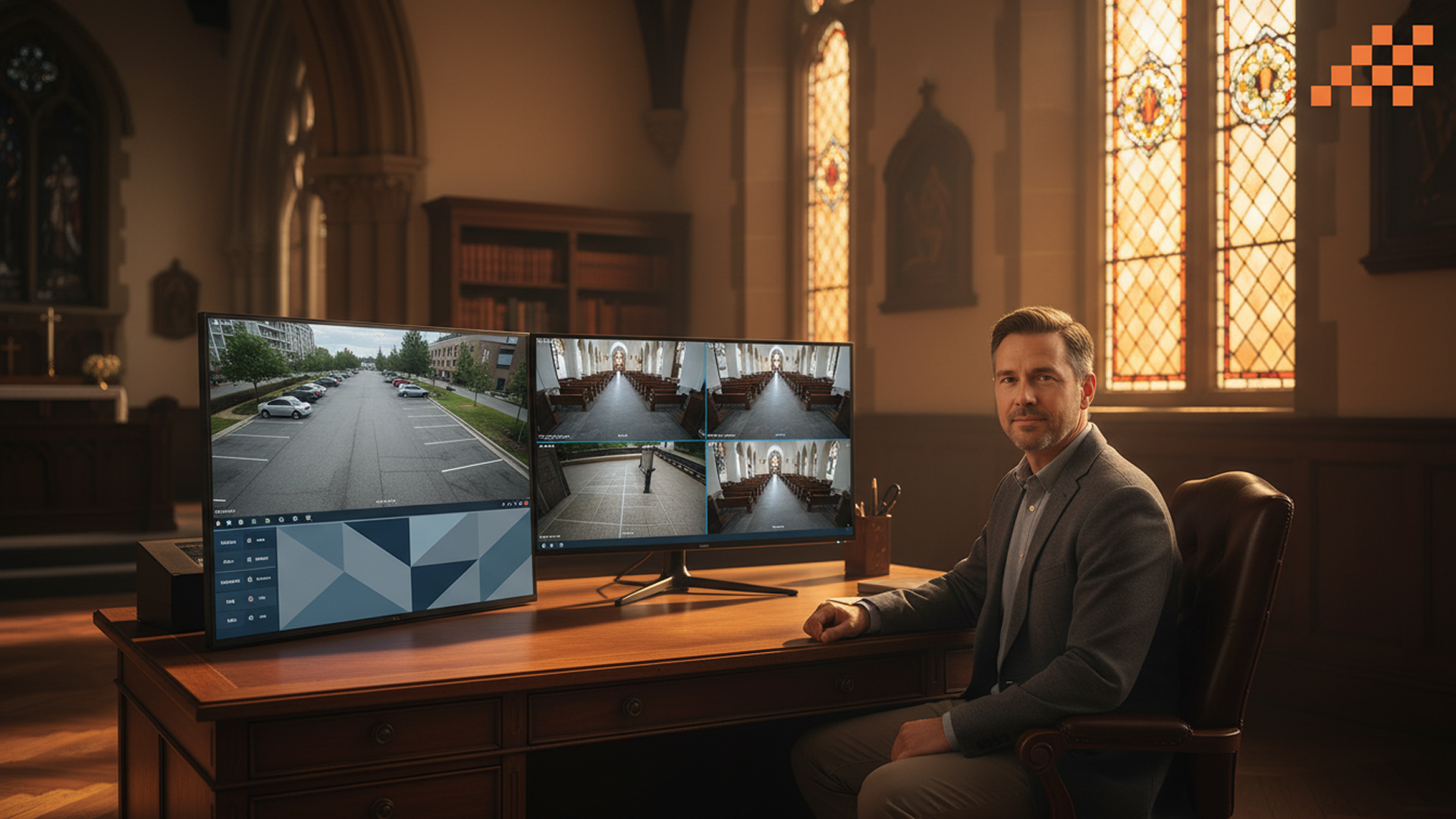
2. Surveillance – Use high-definition cameras to monitor entrances, parking areas, and key spaces in real time.
3. Remote Management – Lock, unlock, and check your system from anywhere using secure apps.
4. Intelligent Scheduling – Automate doors based on your weekly rhythm: Sunday worship, office hours, midweek programs.
5. Centralised Monitoring – Manage everything from one simple dashboard.
Key takeaway: When these five pillars work together, your church gains clarity, control, and confidence.
Pillar One: Access Control
Access Control is the foundation of modern church security. At its core, it answers one simple question: who can enter your building, and when?
Traditional lock-and-key systems worked for decades, but they come with limitations. Keys can be copied, lost, or never returned. When a staff member leaves or a volunteer steps down, re-keying can be expensive and inconvenient. Most importantly, physical keys offer no visibility. You don’t know who entered or at what time.
Modern access control replaces keys with credentials such as key cards, fobs, PIN codes, or even smartphone access. Each credential is unique and can be programmed for specific doors and specific times. A volunteer might have Sunday-only access. A staff member may have weekday office access. A contractor can receive temporary credentials that expire automatically.
If a credential is lost, it can be deactivated instantly - no locksmith required.
Access control gives churches flexibility without complexity. It protects sensitive areas while keeping your building welcoming.
Key takeaway: Smart access control gives you control without taking away your church’s openness.
Pillar Two: Surveillance
Surveillance today is very different from the old, grainy camera systems many churches installed years ago. Modern systems provide high-definition video, clear night visibility, and real-time access from almost anywhere.
Strategic camera placement is key. Entrances, parking areas, children’s ministry spaces, hallways, and gathering areas should be covered thoughtfully. Cameras serve three important purposes:
They deter unwanted behavior
They provide documentation if an incident occurs.
They give leadership visibility when they cannot physically be present.
One of the biggest advantages is remote viewing. Authorized staff can check live footage from a desktop in the office or a secure mobile app at home. After a Wednesday night event, you can confirm doors are secured without driving back to campus.
Surveillance is not about creating fear. It’s about awareness. When you can see what’s happening across your campus, you make faster, calmer decisions.
Key takeaway: Modern surveillance provides visibility and peace of mind without disrupting your church environment.
Pillar Three: Remote Management
Remote Management changes how church leaders handle daily security tasks. Instead of being physically present to unlock a door, check a camera, or respond to an alert, authorised staff can manage the system securely from a phone, tablet, or computer.
Imagine a delivery arriving after hours. Instead of driving to the church, you unlock the door remotely. If a volunteer forgets to secure an entrance, you can confirm and lock it instantly. During severe weather, you can check the building without leaving home.
This flexibility is especially important for churches where staff carry multiple responsibilities. Ministry should not be interrupted by unnecessary trips to the facility.
Remote access does not mean less security. Systems use encrypted connections and secure authentication to ensure only authorised individuals have control.
Remote Management gives leaders responsiveness and confidence without adding complexity.
Key takeaway: With remote management, your church stays protected - wherever you are.
Pillar Four: Intelligent Scheduling
Churches run on rhythms. Sunday services, weekday office hours, youth programs, choir rehearsals, and community events all follow predictable patterns.
Intelligent Scheduling allows your security system to follow those rhythms automatically.
Doors can unlock before Sunday worship and secure again after the final service. Office entrances can operate during business hours but remain locked on weekends. Event spaces can be programmed for temporary access when outside groups are using them.
This automation reduces the risk of human error. No one has to remember to unlock the building early in the morning or double-check every door late at night. The system handles it consistently and reliably.
For leadership teams, this means fewer manual tasks and fewer worries. For congregations, it means a smooth, welcoming experience.
Key takeaway: Intelligent scheduling aligns security with your ministry’s natural flow.**
Pillar Five: Centralised Monitoring
The final pillar brings everything together: Centralised Monitoring.
Instead of managing separate systems for doors, cameras, and alerts, centralised monitoring provides one clear interface. From a single dashboard, authorised staff can:
View live camera feeds
Check door status
Review access logs
Respond to alerts
For churches with multiple buildings or large campuses, this unified view is especially valuable. You don’t have to walk the entire property to confirm security. You can see what’s happening at a glance.
Centralised monitoring also provides useful insight over time. Access logs show patterns - which doors are used most often, which areas have traffic after hours, and whether your schedules match actual activity. This information helps leadership make better decisions about staffing, safety, and future upgrades.
Most importantly, it simplifies operations. One system. One login. One place to manage it all.
Key takeaway: Centralised monitoring turns separate tools into one coordinated security system.
Why the Five Pillars Work Together
The Five Pillars are powerful on their own - but together, they create a complete security strategy
Access Control ensures only the right people enter at the right time.
Surveillance provides visibility across your campus.
Remote Management gives leaders flexibility from anywhere.
Intelligent Scheduling automates your weekly rhythms.
Centralised Monitoring connects everything into one clear system.
When integrated properly, these pillars reduce risk, simplify operations, and protect both people and property.
Church security does not have to be complicated. It simply needs to be coordinated.
Key takeaway: Real protection comes from integration, not isolated systems.
Q/A – Common Questions About Church Security
What happens during a power outage?
Modern systems include battery backup and fail-safe configurations. Critical doors and cameras continue operating for a period of time, and safe exit is always maintained.
Is the system difficult to use?
No. Today’s platforms are designed for non-technical users. Most staff feel comfortable within a few days, especially with proper training.
If you are evaluating ways to strengthen your church’s security infrastructure, the first step is a professional assessment. A structured consultation can help you identify vulnerabilities, prioritise improvements, and determine how the Five Pillars can be implemented in a way that fits your facility, schedule, and budget. With the right strategy and integrated approach, you can enhance protection without compromising the welcoming nature of your ministry. Reach out to begin a focused, no-obligation conversation about securing your church with clarity and confidence.